
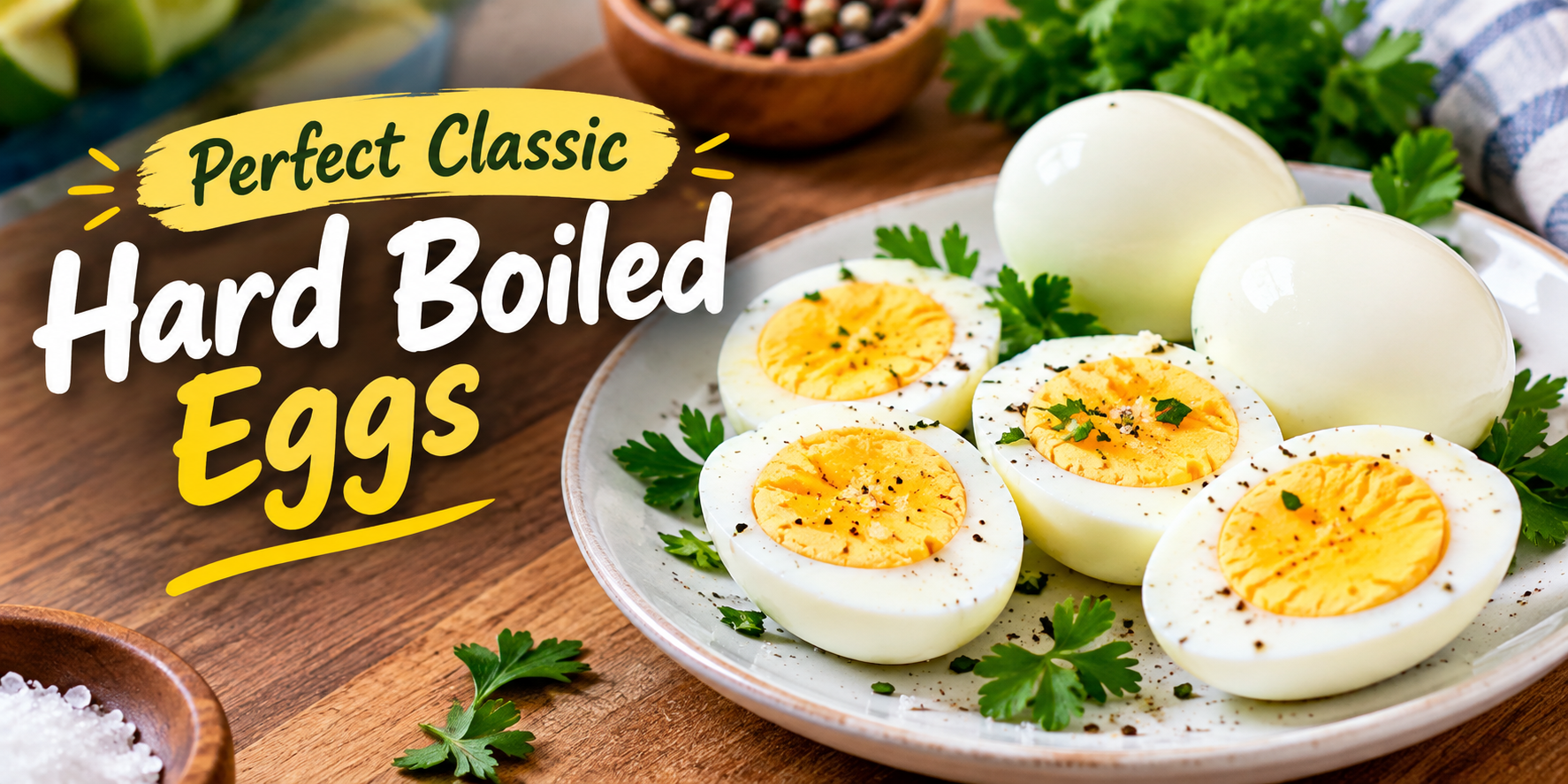
Perfect Classic Hard Boiled Eggs
Introduction
Making hard boiled eggs sounds simple, but getting them just right can take a little practice. Sometimes the shells stick to the whites, the yolks turn gray around the edges, or the center is not cooked enough. The good news is that once you know a reliable method, you can make delicious eggs with a firm white and a creamy, fully cooked yolk every time.
I usually keep eggs in my refrigerator because they are one of the easiest foods to prepare. They are inexpensive, filling, and useful for breakfast, lunch, snacks, and meal prep. A few hard boiled eggs can quickly turn a simple salad into a satisfying meal.
This recipe uses a straightforward stovetop method. You do not need any special equipment. All you need are eggs, water, ice, a pot, and a little patience.
The key is controlling the cooking time. Starting with cold water and bringing everything to a boil gives the eggs a gentle cooking environment. After boiling, an ice bath stops the cooking process and makes the eggs easier to handle.
If you have ever struggled with peeling eggs, do not worry. I will also share some simple tips that make peeling much easier. Once you try this method, you will have a dependable recipe you can use again and again.
Why This Recipe Works
The beauty of hard boiled eggs is their simplicity. There are only a few ingredients, but the cooking technique makes a big difference.
First, the eggs are placed in a saucepan and covered with cool water. This helps the eggs heat gradually rather than being shocked by very hot water.
Next, the water is brought to a full boil. Once it reaches a boil, the heat can be adjusted so the eggs cook evenly without excessive bubbling.
After cooking, the eggs immediately go into an ice-water bath. This is one of the most important steps because it quickly cools the eggs and helps prevent overcooking.
For perfectly cooked hard boiled eggs, I recommend chilling them for at least five minutes. If you have time, leaving them in the ice bath for about 10 minutes works even better.
Ingredients
You only need a few basic ingredients to make hard boiled eggs.
Ingredients
- 6 large eggs
- Cold water, enough to cover the eggs by about 1 inch
- 2 cups ice
- Cold water for the ice bath
- A small pinch of salt, optional
That is all you need. There is no oil, butter, or seasoning required during cooking.
You can easily increase the number of eggs if you are preparing food for a family or making meals ahead. Just make sure the eggs fit comfortably in the pot in a single layer.
Equipment
For this recipe, you will need:
- Medium saucepan
- Slotted spoon
- Large bowl
- Timer
- Small bowl or container for peeling
A saucepan with a lid is especially helpful because covering the pot helps the water reach a boil more efficiently.
How to Make Perfect Hard Boiled Eggs
Step 1: Place the Eggs in the Pot
Start by placing the eggs carefully in the bottom of a medium saucepan. Try not to stack them on top of each other.
Pour cold water into the saucepan until the eggs are covered by about one inch of water.
If an egg has a small crack, it is better to use another egg because cracked shells can allow the egg white to leak into the water.
Step 2: Bring the Water to a Boil
Place the saucepan over medium-high heat. Allow the water to come to a full, rolling boil.
You do not need to stir the eggs while the water heats. Simply let the water gradually reach boiling temperature.
Once the water is boiling, reduce the heat slightly if necessary to maintain a steady boil.
Step 3: Cook the Eggs
For firm yolks, cook the eggs for about 10 to 12 minutes once the water reaches a boil.
I usually aim for around 11 minutes. This gives the yolks a firm texture without making them overly dry.
Cooking time can vary slightly depending on the size of the eggs, the amount of water, and the strength of your stove.
If you prefer a yolk that is slightly softer in the center, reduce the cooking time by a minute or two.
For classic hard boiled eggs, 10 to 12 minutes is a good general range.
Step 4: Prepare an Ice Bath
While the eggs are cooking, fill a large bowl with cold water and plenty of ice.
The ice bath should be ready before the eggs finish cooking.
This step is especially useful because the eggs continue cooking from their own residual heat after being removed from the stove.
Step 5: Transfer the Eggs
When the cooking time is complete, carefully remove the eggs from the hot water with a slotted spoon.
Immediately place them into the ice bath.
Let the eggs sit in the ice water for at least five minutes. For easier peeling, I prefer chilling them for about 10 minutes.
This quick cooling process helps the whites firm up and makes the shells easier to remove.
Step 6: Peel the Eggs
Once the eggs are cool, gently tap one against a hard surface.
Roll it carefully to create small cracks all over the shell.
Start peeling from the wider end of the egg. There is often a small air pocket there, which can make it easier to get underneath the membrane.
Peel the shell away gently under cool running water if needed.
Take your time, especially if you want your hard boiled eggs to look smooth and attractive for serving.
How to Know When Eggs Are Done
The best way to know if your eggs are properly cooked is to follow a consistent cooking time.
A fully cooked egg should have a firm white and a solid yolk. The yolk should be yellow throughout.
If the yolk has a greenish-gray ring around it, the egg is usually still safe to eat, but it has been cooked longer than necessary.
That ring forms when sulfur in the egg white reacts with iron in the yolk. It is not usually a sign that the egg has spoiled.
For the best texture and appearance, avoid cooking the eggs for much longer than necessary.
Tips for Easy-to-Peel Eggs
Peeling hard boiled eggs can sometimes be frustrating, but a few tricks can make the process easier.
Use Older Eggs
Very fresh eggs can sometimes be harder to peel. Eggs that have been stored in the refrigerator for several days often peel more easily.
This happens because the egg’s internal chemistry changes slightly as it ages.
Do Not Skip the Ice Bath
The ice bath is not just for cooling. It also helps separate the egg white from the shell and membrane.
For this reason, I strongly recommend using one whenever you prepare eggs.
Peel Under Water
If the shell is sticking, peel the egg under cool running water.
The water can slip underneath the membrane and help loosen stubborn pieces of shell.
Crack the Shell Completely
Instead of making only one or two cracks, gently roll the egg on the counter until the shell has many small cracks.
This gives you more places to start peeling.
Storage Instructions
Properly cooked hard boiled eggs can be stored in the refrigerator for several days.
If the eggs are unpeeled, place them in a covered container and refrigerate them.
If you have already peeled them, keep them in an airtight container. You can place a slightly damp paper towel in the container to help prevent them from drying out.
For the best quality, use refrigerated cooked eggs within about one week.
Do not leave cooked eggs sitting at room temperature for long periods. Refrigerate them promptly after cooling.
How to Serve Hard Boiled Eggs
There are so many ways to enjoy hard boiled eggs.
For a simple breakfast, slice them in half and sprinkle with salt and black pepper. You can also add paprika, chili flakes, or your favorite seasoning.
For lunch, slice them over a [Classic Green Salad Recipe] with cucumber, tomatoes, avocado, and a light dressing.
You can also use them to make egg salad. Mash the eggs with mayonnaise, mustard, salt, pepper, and a little chopped celery.
Another easy option is avocado toast topped with sliced egg. The creamy avocado and firm egg make a satisfying combination.
They are also excellent for sandwiches, wraps, grain bowls, and meal-prep containers.
Meal Prep Ideas
One of my favorite things about hard boiled eggs is how convenient they are for meal preparation.
You can cook a batch at the beginning of the week and keep them refrigerated for quick meals.
For breakfast, pair an egg with whole-grain toast and fresh fruit.
For lunch, add sliced eggs to an [Autumn Apple Walnut Salad with Maple Dijon Vinaigrette] for a fresh, filling meal with crisp apples, crunchy walnuts, and a flavorful dressing.
For a quick snack, eat an egg with a handful of nuts or fresh vegetables.
You can also pack peeled eggs into a lunchbox with crackers, cheese, fruit, and vegetables.
Because they are easy to prepare in advance, eggs can save time on busy mornings.
Common Mistakes to Avoid
When making hard boiled eggs, there are a few mistakes worth avoiding.
Overcooking
Cooking eggs for too long can make the whites rubbery and the yolks dry.
Stick to a reliable timer rather than guessing.
Skipping the Ice Bath
If you leave the eggs in hot water after cooking, they continue to cook.
Moving them directly into ice water prevents this.
Using Too Little Water
Make sure the eggs are completely covered with water. If the water level is too low, some eggs may not cook evenly.
Peeling While They Are Hot
Hot eggs are more difficult to handle and peel.
Let them cool properly before removing the shells.
Boiling Too Aggressively
A very violent boil can cause eggs to bump against each other or the bottom of the pan. This can lead to cracked shells.
A steady boil is enough.
Nutrition Information
The nutrition values below are approximate and can vary depending on egg size.
For one large egg, you can expect approximately:
- Calories: 78
- Protein: 6 grams
- Fat: 5 grams
- Carbohydrates: Less than 1 gram
- Cholesterol: About 186 milligrams
- Sodium: About 62 milligrams
Eggs are naturally rich in protein and provide several important vitamins and minerals.
Adding vegetables, whole grains, or fruit can help create a more balanced meal.
Frequently Asked Questions
1. How long should I boil eggs?
For firm hard boiled eggs, cook them for about 10 to 12 minutes after the water reaches a boil. Around 11 minutes is a good starting point for large eggs.
2. Why do my eggs have a green ring?
A green-gray ring around the yolk usually means the egg was cooked for too long or at a very high temperature. It is generally harmless, but reducing the cooking time can give you a better appearance and texture.
3. Should I start eggs in cold or boiling water?
Starting eggs in cold water is a simple and reliable method. It allows the eggs to heat gradually and can reduce the chance of cracking.
4. Why are my eggs difficult to peel?
Fresh eggs can sometimes be harder to peel. Chilling the eggs immediately after cooking and peeling them under cool running water can make the process easier.
5. How long can cooked eggs stay in the refrigerator?
Cooked eggs can generally be refrigerated for up to one week when stored properly. Keep them refrigerated in a covered container and discard them if they develop an unusual smell or appearance.
Final Thoughts
Perfect hard boiled eggs are one of those basic recipes that are worth mastering. They are affordable, versatile, easy to prepare, and useful for almost any meal.
The most important things to remember are simple: cover the eggs with cold water, bring the water to a boil, cook for about 10 to 12 minutes, and transfer the eggs immediately to an ice bath.
Once you get comfortable with the timing, you will be able to prepare a batch whenever you need a quick protein-rich ingredient.
Whether you enjoy them for breakfast, add them to salads, make egg salad, or keep them ready for snacks, this method gives you dependable results.
With a little practice, hard boiled eggs can become one of the easiest staples in your kitchen.